 Deutsch
 Español
 Français
 العربية
 Română
 Русский
Revision rhinoplasty (secondary rhinoplasty) in Istanbul
If you have had nose surgery and still have a problem with its shape or your breathing, a second operation may help. Here is when it makes sense, how it differs from the first, and what to expect.
- Operation time Varies; set in your plan
- Hospital stay Decided individually in your plan
- Time in Istanbul 7–10 days; at least 10–14 with rib grafts
- Back to work Often 1–2 weeks

What is revision rhinoplasty?
Revision (secondary) rhinoplasty corrects problems that remain or appear after earlier nose surgery: asymmetry, a remaining hump, a drooping or over-lifted tip, a collapsed bridge or a blocked airway. Scar tissue and cartilage removed the first time make it more complex, so it is usually done open, under general anaesthesia, often with cartilage grafts from the septum, ear or rib. Surgeons generally wait at least a year after the last operation, and the new result takes about a year to settle.
What it can do
- Correct asymmetry, a remaining hump or a collapsed bridge
- Reshape a drooping, pinched or over-lifted tip
- Rebuild lost support with cartilage grafts
- Reopen a narrowed airway
What it cannot do
- Heal as predictably as a first operation, because of scar tissue
- Show the result early: it takes about a year, sometimes 18 months
- Rule out a further correction, which is more likely after a revision
Is it right for you?
A revision makes sense when the problem is clear and the first result has fully settled. Suitability is confirmed at an in-person examination.
Usually a good fit if
- At least a year has passed since your last nose operation
- A specific problem remains, such as asymmetry, a crooked bridge, a saddle nose or an over-lifted tip
- Your breathing is worse since the first operation
- You accept possible ear or rib grafts and a less predictable recovery
Better to wait or consider alternatives if
- Your last operation was less than a year ago
- Fullness above the tip may still be swelling or scar, which often responds to a steroid injection and taping
- You feel driven to keep having operations, or live with body dysmorphic disorder or untreated depression
- You smoke, use cocaine or have an uncontrolled bleeding disorder
Techniques
Planning starts from what the first operation changed and what is left, especially how much septal cartilage remains.

Open approach
Used for most revisions, so the surgeon can see the framework through scar tissue; it leaves a fine scar between the nostrils. Small corrections can sometimes be made from inside the nose.
Best for
Most revisions, especially with grafts
Septal and ear cartilage
Septal cartilage comes first if enough remains. Ear cartilage, taken from behind the ear, suits the tip and small supports but is thin and fragile.
Best for
Tip support and smaller rebuilds
Rib cartilage
Your own rib gives strong support through a small chest incision; warping is its most common problem. Donor rib avoids the incision, but whether it is absorbed more is debated.
Best for
Major rebuilding or raising the bridge
Spreader grafts and fascia
Cartilage strips along the bridge reopen a narrowed valve and correct an inverted-V; fascia from the scalp or diced cartilage smooths an uneven bridge.
Best for
Blocked breathing or an uneven bridge

Op. Dr. Bilgehan İlker
Specialist in plastic, reconstructive and aesthetic surgery
- Specialist training: Dokuz Eylül University
- Medical degree: Trakya University
- Health tourism authorization: ST-2657
- Dr. İlker speaks English and Turkish.
How Dr. İlker approaches revision rhinoplasty
Op. Dr. Bilgehan İlker is a specialist in plastic, reconstructive and aesthetic surgery, trained at Dokuz Eylül University. She writes that nose surgery has no standard plan, which is especially true when an earlier operation has already changed the nose.
She notes that a nose takes six months to a year to reach its final shape, so a revision is planned only after the first result has settled and you have been examined in person.
- Your history first Notes and photos from your first operation show which cartilage was removed and what grafts were used.
- Breathing checked too In one series about two-thirds of revision patients had both cosmetic and breathing problems.
- Grafts agreed beforehand Any ear, rib or fascia graft, and its donor-site risks, is explained and consented to in advance.
The operation, step by step
The stages mirror a first rhinoplasty, with more planning.
-
Records and examination
Earlier notes and photos are reviewed, and the nose, inside and out, and the remaining septal cartilage are assessed.
-
Consent and anaesthesia
Graft options are agreed in writing; the operation is done under general anaesthesia.
-
Incisions
Usually open, plus a small incision behind the ear, on the chest or in the scalp if a graft is taken there.
-
Rebuilding
Scar tissue is released, missing structures are rebuilt with grafts, and the tip, bridge and airway are corrected.
-
Splinting
External stitches come out at days 5–7; the outer splint stays about a week, sometimes two.
Your days in Istanbul
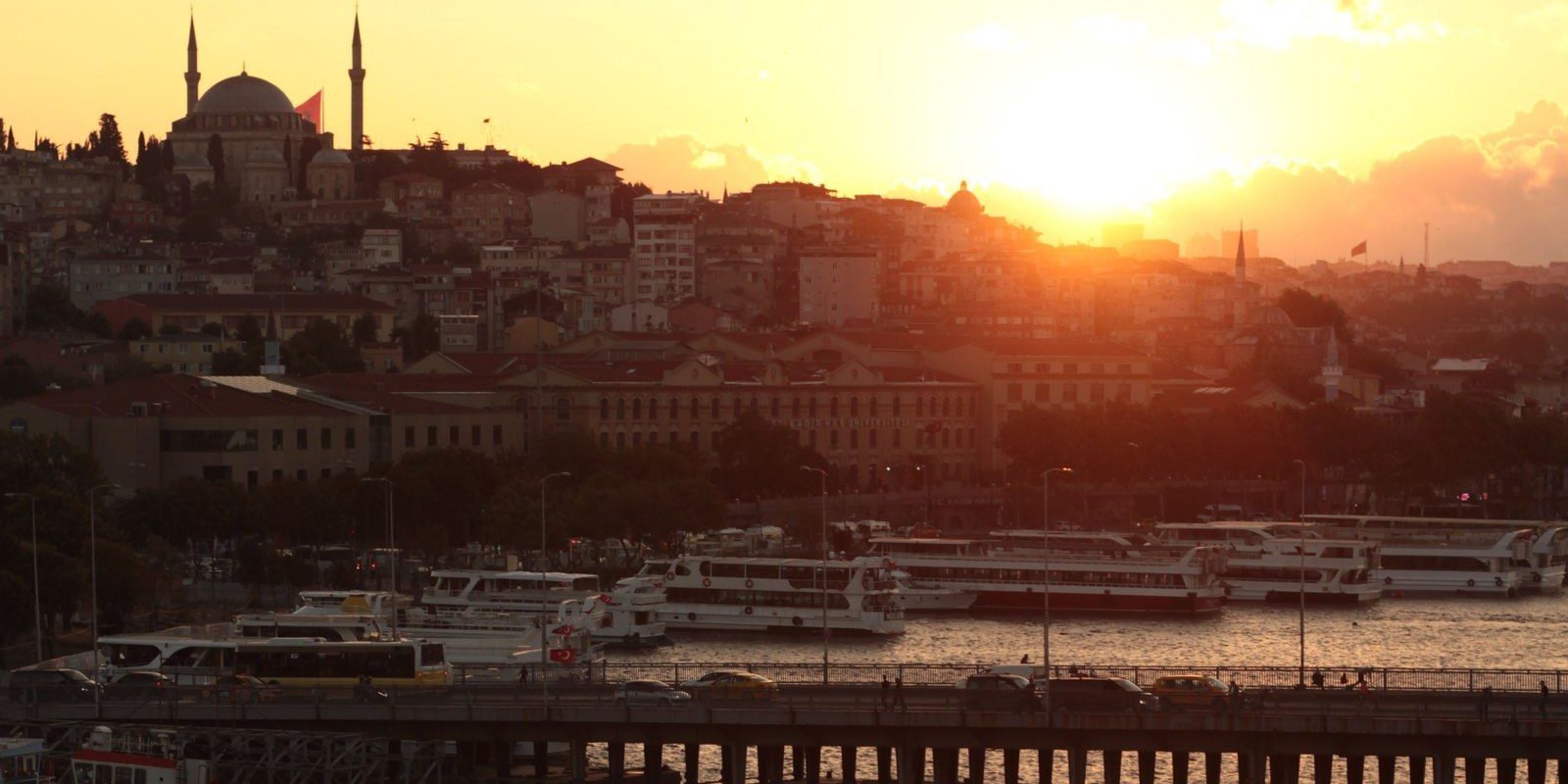
Plan around an in-person examination, splint removal and a check before flying; the length depends mainly on whether rib is used.
-
Arrive in time to be examined
Before surgery
If you are travelling far, BAAPS suggests arriving at least 72 hours before an operation of up to three hours, or a week before a longer one.
-
Rest close by
The first days
Expect a blocked nose and bruising, plus chest soreness after a rib graft.
-
Cleared to fly
Before you fly home
Plan 7–10 days for a standard revision and at least 10–14 after a rib graft or a long operation (BAAPS suggests 2–4 weeks). ASPS advises 7–10 days before flying after facial surgery.
Recovery, day by day
Much like a first rhinoplasty, but healing is less predictable and swelling may last longer.
- Day 1
Blocked and sore
You breathe through your mouth, and your chest is sore too if rib was taken. Keep your head raised.
- Days 2–3
Bruising
Bruising appears around the eyes and pain eases. Do not blow your nose.
- Week 1
Splint off
Nasal breathing stays difficult; the splint and stitches usually come off around day 7.
- Week 2
Back to work
Bruises fade by days 10–20. Flying is usually possible from days 7–10, later after a rib graft.
- Weeks 3–4
Settling
Swimming is usually fine from weeks 3–4; keep glasses off the bridge for 6 weeks.
- Months 2–3
Slow progress
Swelling may fade more slowly than after a first operation. Contact sport resumes after 4–6 weeks.
- Month 6
Tip settling
Lasting fullness above the tip may be treated with a steroid injection rather than surgery.
- Month 12
The result
The final shape appears at about a year, sometimes 18 months.
Contact us straight away if you notice
- Difficulty breathing, or sudden breathlessness or chest pain, especially after a rib graft
- A nosebleed that does not stop
- Fever, discharge or severe pain
- A painful swelling inside the nose (a possible septal haematoma)
- A painful, swollen calf (a possible blood clot)
In an emergency, call your local emergency number.
Aftercare at home
- Sleep on your back with your head raised.
- Do not blow your nose until cleared; sneeze with your mouth open.
- Keep the splint dry, and avoid bending, straining and lifting.
- After a rib graft, follow your chest wound and pain relief instructions.
- Keep glasses off the bridge for 6 weeks, and protect your nose from knocks and sun.
Risks and how they are reduced
A revision carries every risk of a first rhinoplasty, some of them more often. Figures come from published studies, not from this clinic.
Waiting until the first result settles, reviewing your earlier records, agreeing grafts in advance, stopping nicotine 6 weeks ahead and operating in a licensed hospital in Istanbul all help reduce risk.
| Risk | How often |
|---|---|
Another revisionIn a US study of 175,842 patients, revision followed 3.1% of first operations and 11.0% of revisions; one centre reported 10.5% and 23.9%. | Varies |
Swelling, bruising and blockageExpected early on, and less predictable after a revision. | Common |
Rib graft problemsAcross 1,648 patients: warping 3.05%, absorption 1.2% and a raised chest scar 2.08%; no collapsed lung was reported. | Uncommon |
Septal perforationMore likely in revision septal surgery, because of scar tissue and missing cartilage. | Uncommon |
InfectionFewer than 1 in 100 rhinoplasties; graft infection was 1.45% in rib-graft studies. | Rare |
Asymmetry, smell change or dissatisfactionThese can occur after any rhinoplasty, including a revision. | Uncommon |
Results and how long they last
A successful revision is long-lasting. The final shape appears at about a year, sometimes 18 months, and healing is less predictable than the first time. Results vary from person to person.
How long it lasts: Long-lasting, though grafts can occasionally warp or be absorbed.
With any surgical or interventional procedure, results vary from person to person. We recommend a detailed consultation with your doctor before any procedure.
Before and after
Before and after photos are shared only with patients’ written consent. You can ask to see examples during your consultation.
Before and afterQuestions to ask at your consultation
Take these to any surgeon you see — including us.
- What is your specialist training, and how many revisions do you perform?
- What can realistically be corrected in my nose?
- Will I need grafts, and from where?
- Will you assess and treat my breathing too?
- How long should I stay in Istanbul if rib cartilage is used?
- What happens, and who pays, if I need a further correction?
What shapes your plan and quote
We do not publish prices. After Op. Dr. Bilgehan İlker has assessed your records and case, you receive a personal written plan. It depends on:
- How much rebuilding is needed
- Whether grafts come from the septum, ear or rib
- Whether breathing is treated at the same time
- Your hospital stay and time in Istanbul
We do not publish prices: every plan is personal and is written for you after your assessment.
Frequently asked questions
How long should I wait before revision rhinoplasty?
In most cases, at least a year after your last nose operation. Swelling hides the final shape for many months, and cosmetic corrections are rarely made before 6–12 months. Until then, your nose may still change noticeably as the swelling settles.
How is revision different from a first rhinoplasty?
It is more complex than a first rhinoplasty. Scar tissue makes the structures harder to work with, and cartilage may already have been removed, so most revisions use an open approach and grafts from the septum, ear or rib. Recovery is similar, but healing is less predictable.
How common is revision rhinoplasty?
Figures depend on how revision is defined. In a US study of 175,842 patients followed for at least three years, 3.1% had a revision after a first septorhinoplasty; reviews quote figures of up to 15%, and many revisions are small refinements.
Is rib cartilage risky?
It has its own, mostly uncommon, risks. A review of 1,648 patients found warping in 3.05% and absorption in 1.2%, a raised chest scar in 2.08% and no collapsed lungs. Expect chest soreness for the first days, on top of the usual discomfort in the nose.
Does revision rhinoplasty take longer to heal?
The stages are similar to a first rhinoplasty: the splint comes off at about a week and most people return to work after 1–2 weeks. Healing is less predictable after a revision and swelling may last longer, although no study gives a reliable timeline.
Can my breathing be fixed at the same time?
Usually, yes. In one centre's series, about two-thirds of revision patients had both cosmetic and breathing problems. Straightening the septum, spreader grafts for a narrowed valve and turbinate reduction can be part of the same operation, much as in a septorhinoplasty.
My tip still looks round months after surgery. Is it swelling or a problem?
Often it is swelling. Tip and supratip swelling is normal for many months, and lasting fullness above the tip can often be treated with a steroid injection and taping rather than another operation. It is wiser to decide on revision after a year.
Do I need records from my first operation?
Yes, if you can get them. The operation notes show which cartilage was removed and which grafts were used, and before-and-after photos help plan the correction. Bring whatever you have to your consultation, even if the records are incomplete or in another language.
How long should I stay in Istanbul for revision rhinoplasty?
Plan on 7–10 days for a standard revision. After a rib graft or an operation longer than three hours, plan at least 10–14 days; BAAPS suggests 2–4 weeks in such cases. ASPS advises waiting 7–10 days after facial surgery before flying.
Could I need another revision?
It is possible. A further correction is more likely after a revision than after a first operation: 11.0% versus 3.1% in a large US study, and 23.9% in one centre's series. Ask any surgeon how a further correction would be handled before you decide.
Medical informationThe information on this page is general information only. It is not medical advice and does not replace a diagnosis or treatment. Every surgical and interventional procedure carries risks, which will be explained to you in detail during your consultation. Whether this procedure suits you can only be decided after an in-person examination and assessment. We encourage you to also seek independent advice from your own doctor before deciding.
Sources
- ASPS: Rhinoplasty
- BAAPS: Rhinoplasty
- StatPearls: Rhinoplasty (2024)
- StatPearls: Rhinoplasty tip-shaping surgery
- Spataro et al. Revision rates in 175,842 septorhinoplasty patients (2016)
- Hacker et al. Primary versus revision rhinoplasty (2021)
- Chen et al. Rib cartilage complications in rhinoplasty, meta-analysis (2023)
- BAAPS: Cosmetic tourism guidelines (2023)
A conversation, at your pace.
Not sure whether it is time for a revision?
Send your questions, and earlier records or photos if you wish. Op. Dr. Bilgehan İlker will tell you honestly whether an examination is worthwhile.

- Nef 22 Ataköy, D Blok, Kat 1, Daire 36, Çobançeşme E-5 Yanyol Cad. No:22, Bakırköy / İstanbul
- Monday to Saturday, 10:00–18:00
- +90 542 280 27 51
- Dr. İlker speaks English and Turkish.
Thank you — your question has reached the clinic.
The team will reply using the contact details you gave. If you would like to talk sooner, continue on WhatsApp — your request is already written for you.
Continue on WhatsApp