
 Deutsch
 Español
 Français
 العربية
 Română
 Русский
Breast reconstruction in Istanbul
For women who have had, or are facing, a mastectomy or lumpectomy, and those born with a breast difference: the options, the timing and each stage of recovery, at your own pace.
- Operation time Implant adds about 1 hour; a flap adds 2–6 hours
- Hospital stay Implant: possibly same day; flap: usually a few days
- Time in Istanbul Implant: at least 5–7 days; flap: longer, set individually
- Back to work Recovery 2–4 weeks (implant) or 4–8 weeks (flap)

What is breast reconstruction?
Breast reconstruction is surgery to rebuild the shape of one or both breasts after a mastectomy or lumpectomy, or for a breast difference present from birth. It uses an implant, often after a temporary tissue expander, your own tissue moved from another part of the body, or both. It can begin during the mastectomy or later, and usually happens in stages. Recovery typically takes 2–4 weeks after implant reconstruction and 4–8 weeks after a flap.
What it can do
- Rebuild a breast shape after mastectomy or lumpectomy
- Begin during the mastectomy or at a later date
- Use an implant, your own tissue, or both
- Recreate a nipple and areola at a later stage
What it cannot do
- Recreate a breast that looks and feels exactly like the natural one
- Change the risk of the cancer coming back
- Allow breastfeeding on the reconstructed side
Is it right for you?
Reconstruction is a choice, not a requirement. Suitability is confirmed at an in-person examination, together with your breast surgeon or oncology team.
Usually a good fit if
- You are planning a mastectomy, including a risk-reducing one for high genetic risk
- You have had a mastectomy or lumpectomy, recently or years ago
- You were born with a breast difference
- You feel able to cope with your treatment and have no condition that impairs healing
Better to wait or consider alternatives if
- You would prefer not to have reconstruction: going without it, or an aesthetic flat closure, is an equally valid choice
- You smoke: wound problems are more likely
- Radiotherapy has tightened your skin and you hope for an implant alone; a flap may be needed
- You have inflammatory breast cancer: delayed reconstruction may be advised
Techniques
No single technique suits everyone; the choice depends on your body, your treatment and your preference.

Immediate or delayed
Reconstruction can start during the mastectomy or later. If radiotherapy is planned, an expander or implant placed at the mastectomy can keep options open.
Best for
Fitting around cancer treatment
Expander, then implant
A temporary expander is filled with saline at clinic visits over 1–2 months, then replaced with the final implant, usually silicone gel. With enough skin, an implant can go in directly.
Best for
A shorter operation and recovery
Your own tissue (flap)
Skin and fat, sometimes muscle, come from the lower abdomen (DIEP, TRAM), back (latissimus dorsi), thigh (TUG, PAP) or buttock (gluteal); some are reconnected with microsurgery.
Best for
A more natural feel, or skin after radiotherapy
Later refinements
Fat grafting fine-tunes shape, the other breast can be adjusted for balance, and the nipple can be rebuilt and tattooed or recreated with a 3D tattoo.
Best for
Shape, symmetry and the nipple

Op. Dr. Bilgehan İlker
Specialist in plastic, reconstructive and aesthetic surgery
- Specialist training: Dokuz Eylül University
- Medical degree: Trakya University
- Health tourism authorization: ST-2657
- Dr. İlker speaks English and Turkish.
How Dr. İlker approaches breast reconstruction
Op. Dr. Bilgehan İlker trained in plastic, reconstructive and aesthetic surgery at Dokuz Eylül University. Her own page says a breast is not what defines a woman, yet losing one can affect how a woman feels in her body and daily life.
She performs reconstruction during the cancer operation or after chemotherapy and radiotherapy, including after risk-reducing mastectomy. Her own video channel includes a first-stage tissue expander operation.
- Planned with your cancer team Timing and technique are agreed alongside your breast surgeon and oncologist.
- Implant, own tissue or both Own tissue feels more natural, she notes, but recovery is longer and it leaves scars in two places.
- The nipple last She rebuilds the nipple about 3–4 months after reconstruction under local anaesthesia, with a skin graft or tattoo for the areola.
The operation, step by step
Reconstruction usually happens in stages. A typical sequence:
-
Joint planning
Your breast surgeon and plastic surgeon plan together, and you see what each option involves.
-
Marking and anaesthesia
In hospital, your chest and any donor area are marked before general anaesthesia.
-
Mastectomy, if immediate
The breast surgeon removes the breast tissue, then reconstruction begins.
-
Building the breast
An expander or implant is placed, or a flap is shaped and, if needed, connected to chest vessels.
-
Later stages
Expander exchange, fat grafting, balancing and the nipple follow over the coming months.
Your days in Istanbul
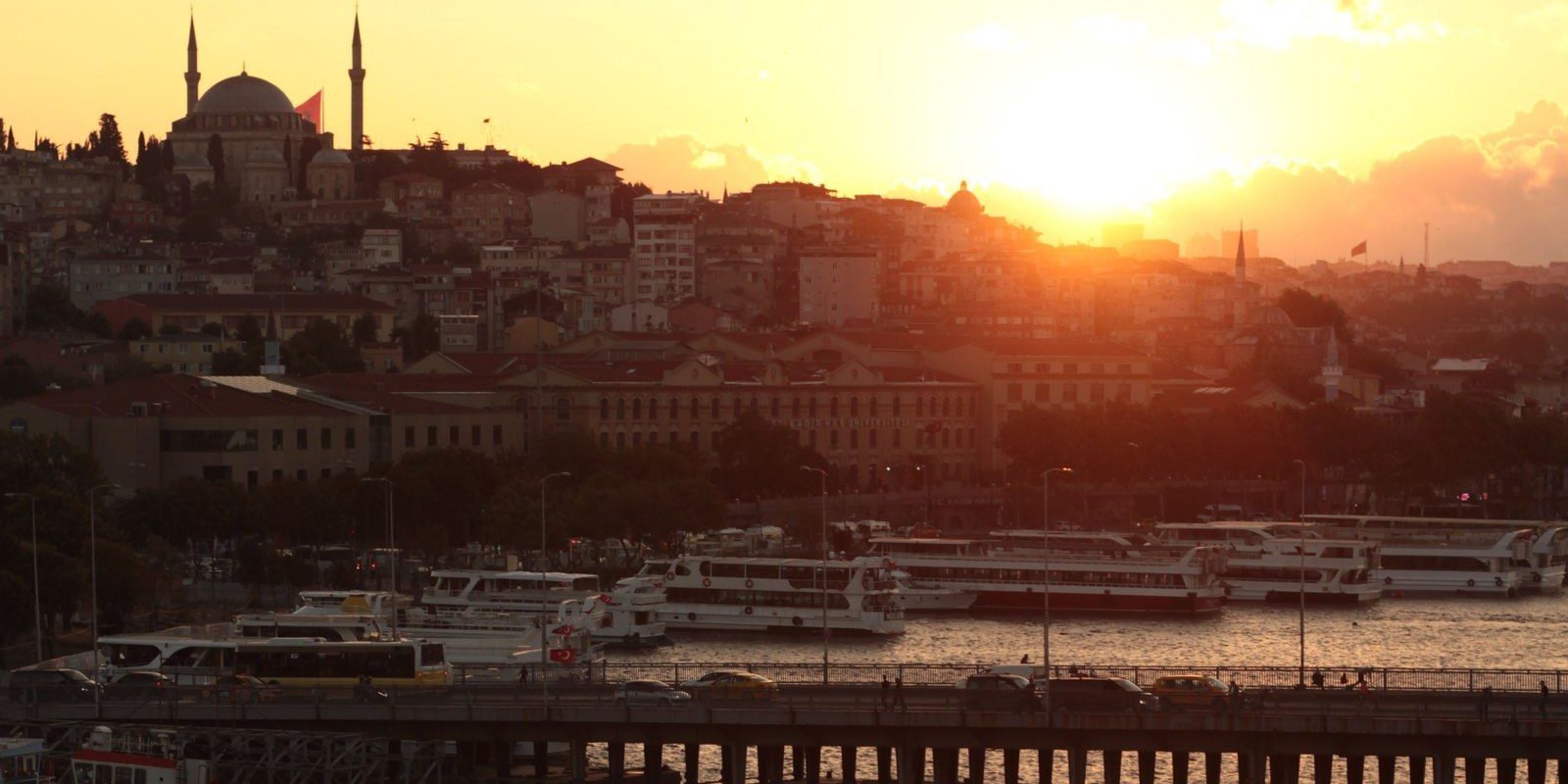
Reconstruction often means more than one visit; if you live abroad, plan each stage before you begin.
-
Examination
Before surgery
Arrive early enough for your examination, tests and marking, with your treatment records.
-
Your operation
Surgery day
After implant reconstruction you may go home the same day; after a flap, expect a few days in hospital.
-
Gentle movement
The first days
Short walks are encouraged, drains are checked, and pain and muscle spasm are treated.
-
Clearance to travel
Before you fly home
UK NHS guidance on breast surgery advises not flying for 5–7 days; after a flap, your surgeon sets the date.
-
Coming back
Later stages
Expanders are filled over 1–2 months and the nipple follows about 3–4 months later; agree where each step happens.
Recovery, day by day
Recovery differs between implant and flap reconstruction; timings are typical.
- Day 1
Waking up
After implant reconstruction you may go home the same day with drains and a support garment; after a flap you stay in hospital.
- Days 2–3
Moving gently
Early walking is encouraged, and pain and chest muscle spasm are treated.
- Week 1
Home routines
No heavy lifting or reaching overhead. After implant reconstruction, wait 5–7 days before flying.
- Weeks 2–4
Healing
Implant reconstruction usually heals in 2–4 weeks as expander fills continue; after a flap, tiredness can last for weeks.
- Months 2–3
Back to activity
Strenuous activity usually returns after 4–6 weeks; flap recovery takes 4–8 weeks, and the nipple can follow at about 3–4 months.
- Month 6
Refinements
Fat grafting and balancing may be done in stages to improve shape and symmetry.
- Month 12
Settling
Sensation may partly return. Scars fade but remain, and implants need an ultrasound or MRI every few years.
Contact us straight away if you notice
- Shortness of breath, chest pain or an irregular heartbeat: call emergency services
- Sudden swelling, or a change in the breast's shape or size
- Warmth or a colour change in the skin over the reconstruction
- Fever, wound discharge or a wound that opens
- Pain or swelling in one calf
In an emergency, call your local emergency number.
Aftercare at home
- Care for drains and wear your support garment as advised.
- Avoid heavy lifting, reaching overhead and driving until cleared.
- Report pain or muscle spasm that is not controlled.
- Keep up screening of your other breast and check both sides yourself.
- With implants, have an ultrasound or MRI every few years to check for rupture.
Risks and how they are reduced
Every reconstruction carries surgical risks, and some depend on the method.
Planning with your cancer team, choosing a method that suits your body, stopping smoking and careful aftercare lower the risks. Reconstruction does not change the risk of the cancer returning.
| Risk | How often |
|---|---|
Bleeding, infection and wound problemsPossible with any method; smoking makes wound problems more likely. | Uncommon |
Implant problems and further surgeryCapsules can harden and implants can rupture. In one ten-year study of reconstruction, contracture occurred in 20.5% and 49.0% had another operation. | Common |
Flap and donor-site problemsPart or all of a flap can lose its blood supply; complete loss is more likely when both breasts use DIEP flaps. Donor sites can be numb, and abdominal flaps can cause weakness or a hernia. | Varies |
Sensation and symmetryThe rebuilt breast feels different, and after one-sided reconstruction the breasts can look more different over time. | Common |
Rare implant-related conditionsRare capsule cancers (BIA-ALCL, BIA-SCC) have been reported, and some women report symptoms they link to implants. | Rare |
Results and how long they last
The result builds in stages as tissues heal, and small further operations are often needed. A reconstructed breast is not the same as a natural one: sensation differs, and scars remain, though they fade.
A flap usually does not need replacing but changes with age and weight; implants may need replacing. Breastfeeding is not possible on the reconstructed side. Results vary from person to person.
How long it lasts: A flap usually lasts and ages with you, while implants are not lifetime devices and may need replacement or removal.
With any surgical or interventional procedure, results vary from person to person. We recommend a detailed consultation with your doctor before any procedure.
Questions to ask at your consultation
Take these to any surgeon you see — including us.
- Which options suit my body and my cancer treatment?
- Should reconstruction be immediate or delayed for me?
- How will radiotherapy affect my options?
- How many stages do you expect, and over what time?
- If a microsurgical flap is considered, where would it be done?
- How would later stages work if I live abroad?
- Whom do I contact after I fly home?
What shapes your plan and quote
Prices are not published. After your assessment you receive a personal written plan, stage by stage, stating what is included.
- Implant, expander, flap or a combination
- The number of stages
- Hospital stay, longer after a flap
- Any adjustment of the other breast
- Your number of visits and length of stay
We do not publish prices: every plan is personal and is written for you after your assessment.
Frequently asked questions
How long after a mastectomy can reconstruction be done?
It can begin in the same operation as the mastectomy, or months or years later. If radiotherapy is planned, starting at the mastectomy, for example with an expander, can keep more options open. Your breast surgeon and oncologist help decide the timing.
Implant or my own tissue: which is better?
Neither suits everyone. Implant reconstruction is a shorter operation with a quicker recovery, but implants may need replacing. A flap takes longer and leaves a donor scar, but usually lasts. A 2024 Cochrane review found own-tissue reconstruction may give higher satisfaction, with low-certainty evidence.
How long is recovery after a DIEP flap?
You usually stay in hospital for a few days, and recovery takes about 4–8 weeks. Strenuous activity is usually avoided for 4–6 weeks, and tiredness can last several weeks while both the chest and the abdomen heal. Plan for help at home during this time.
Can the nipple be reconstructed?
Yes. The nipple can be rebuilt from local skin and coloured with a tattoo, or recreated with a 3D tattoo alone. Op. Dr. Bilgehan İlker describes doing this about 3–4 months after reconstruction, under local anaesthesia, as one of the final stages.
Can I have an implant after radiotherapy?
Sometimes, but not always. Skin that has had radiotherapy can be too tight for an implant alone, and a flap may then be the only option. This is one reason the timing of reconstruction is planned carefully alongside your radiotherapy.
How many operations will I need?
Usually more than one. Typical later stages include exchanging an expander for an implant, balancing the other breast, fat grafting and nipple reconstruction. Your surgeon can outline the likely stages and their timing before you begin, including visits if you live abroad.
Does reconstruction increase the risk of the cancer coming back?
No. Choosing reconstruction does not change the risk of the cancer returning. Your oncology team continues your follow-up as usual. Chemotherapy usually does not rule out reconstruction, and reconstruction usually does not delay the start of chemotherapy. Ask your oncologist about timing.
Will I still need mammograms?
The reconstructed breast usually does not have screening mammograms, but the other breast continues to be screened, and checking both sides yourself remains important. If you have implants, an ultrasound or MRI every few years checks for rupture, not for cancer.
Do I have to have reconstruction?
No. Reconstruction is a choice. Some women prefer an aesthetic flat closure, a smooth, flat chest wall, and women with larger breasts may consider a 'Goldilocks' technique that uses mastectomy skin to form a small mound. Delayed reconstruction also remains possible later.
When can I fly home after breast reconstruction in Istanbul?
After implant reconstruction, UK NHS guidance on breast surgery advises not flying for 5–7 days, as surgery and flying both raise the risk of clots. After a flap, recovery is longer and your surgeon sets the date. Ask how later stages would be arranged.
Medical informationThe information on this page is general information only. It is not medical advice and does not replace a diagnosis or treatment. Every surgical and interventional procedure carries risks, which will be explained to you in detail during your consultation. Whether this procedure suits you can only be decided after an in-person examination and assessment. We encourage you to also seek independent advice from your own doctor before deciding.
A conversation, at your pace.
Would you like to talk through your options?
You can ask questions at any stage, whether surgery is planned or years behind you. Share as much or as little as you wish.

- Nef 22 Ataköy, D Blok, Kat 1, Daire 36, Çobançeşme E-5 Yanyol Cad. No:22, Bakırköy / İstanbul
- Monday to Saturday, 10:00–18:00
- +90 542 280 27 51
- Dr. İlker speaks English and Turkish.
Thank you — your question has reached the clinic.
The team will reply using the contact details you gave. If you would like to talk sooner, continue on WhatsApp — your request is already written for you.
Continue on WhatsApp